The Venus of Venafro: a sculptural masterpiece from a Roman nymphaeum
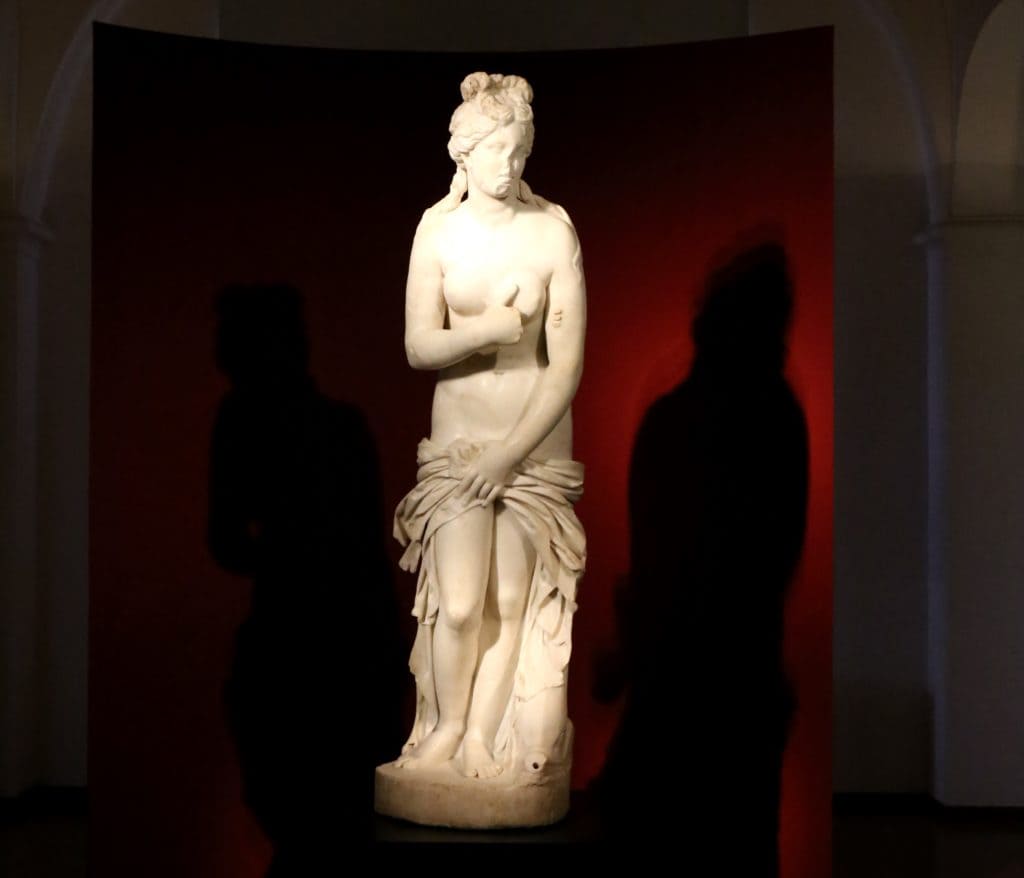
In 1958, during excavations in via Colonia Giulia in Venafro, an extraordinary white marble statue depicting the goddess Venus at her bath came to light.
Dating to the 2nd century AD, during the Antonine period, the work skilfully reinterprets Greek models from the 4th and 2nd centuries BC. It combines echoes of Praxiteles’ Aphrodite of Knidos and the Capitoline Venus, with particularly close compositional affinities to the Venus Landolina in Syracuse.
The goddess is shown just after her ritual bath: she modestly covers her breast with her right hand, while her left holds soft drapery over her lower abdomen. Her wet hair falls in curling strands over her shoulders. The dolphin at the base, with an opening for water, confirms that the statue formed the centrepiece of a monumental fountain or public nymphaeum connected to the nearby theatre complex.